
Luxury design should feel timeless, personal, and deeply connected to the people who live there. Yet as trends spread across social media, builder communities, and design inspiration platforms, many high-end homes are beginning to look remarkably alike.
None of the following design elements are inherently "bad." In fact, each can be beautiful when used intentionally. The problem arises when they become the default rather than a thoughtful design decision.
Here are five trends we believe have become overused—and what we think creates a more enduring sense of luxury instead.
1. The Copy-and-Paste Modern Farmhouse
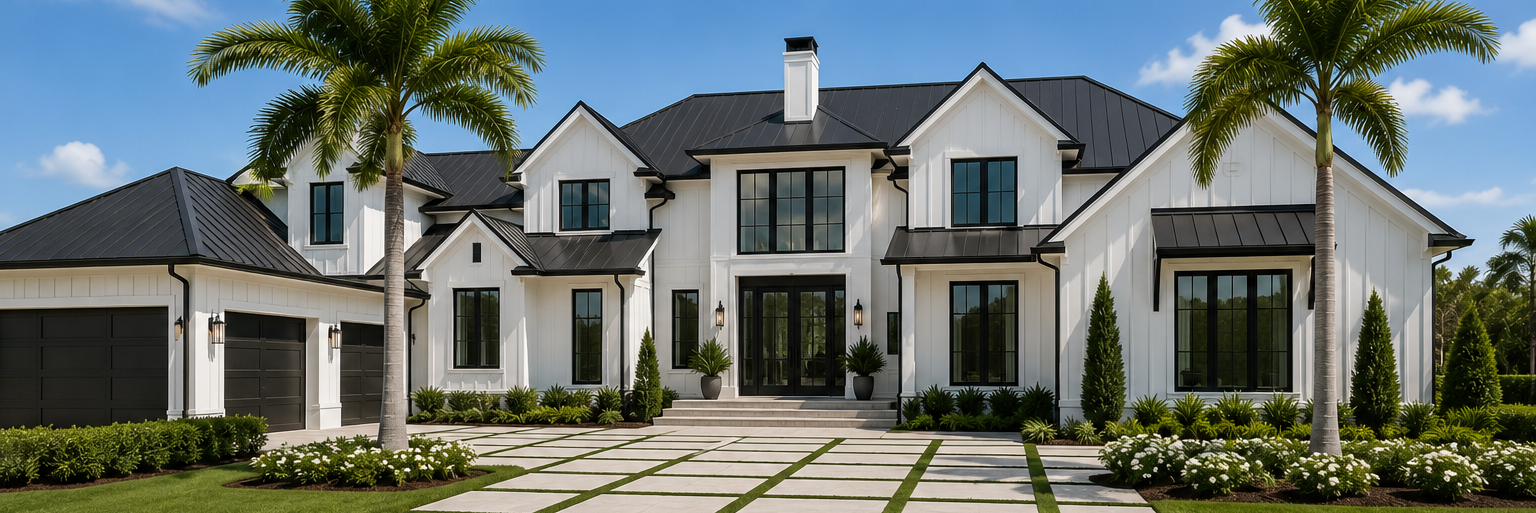
For nearly a decade, black windows, black roofs, black fixtures, black hardware, white exteriors, and simplified detailing became the universal language of "high-end" design. The Modern Farmhouse aesthetic transformed residential architecture, and at its best, it remains beautiful.
But today, many luxury homes borrow these elements without embracing the architectural principles that made the style successful in the first place. The result is a home that feels more like a trend than an expression of its setting.
Rather than defaulting to black because it feels luxurious, consider whether the architecture calls for softer charcoal tones, warm bronze finishes, natural metals, or simply allowing proportion, materiality, and craftsmanship to become the focal point.
Luxury isn't created by a color palette. It's created by architecture that feels authentic and thoughtfully resolved.
2. The Floor-to-Ceiling Stone TV Wall
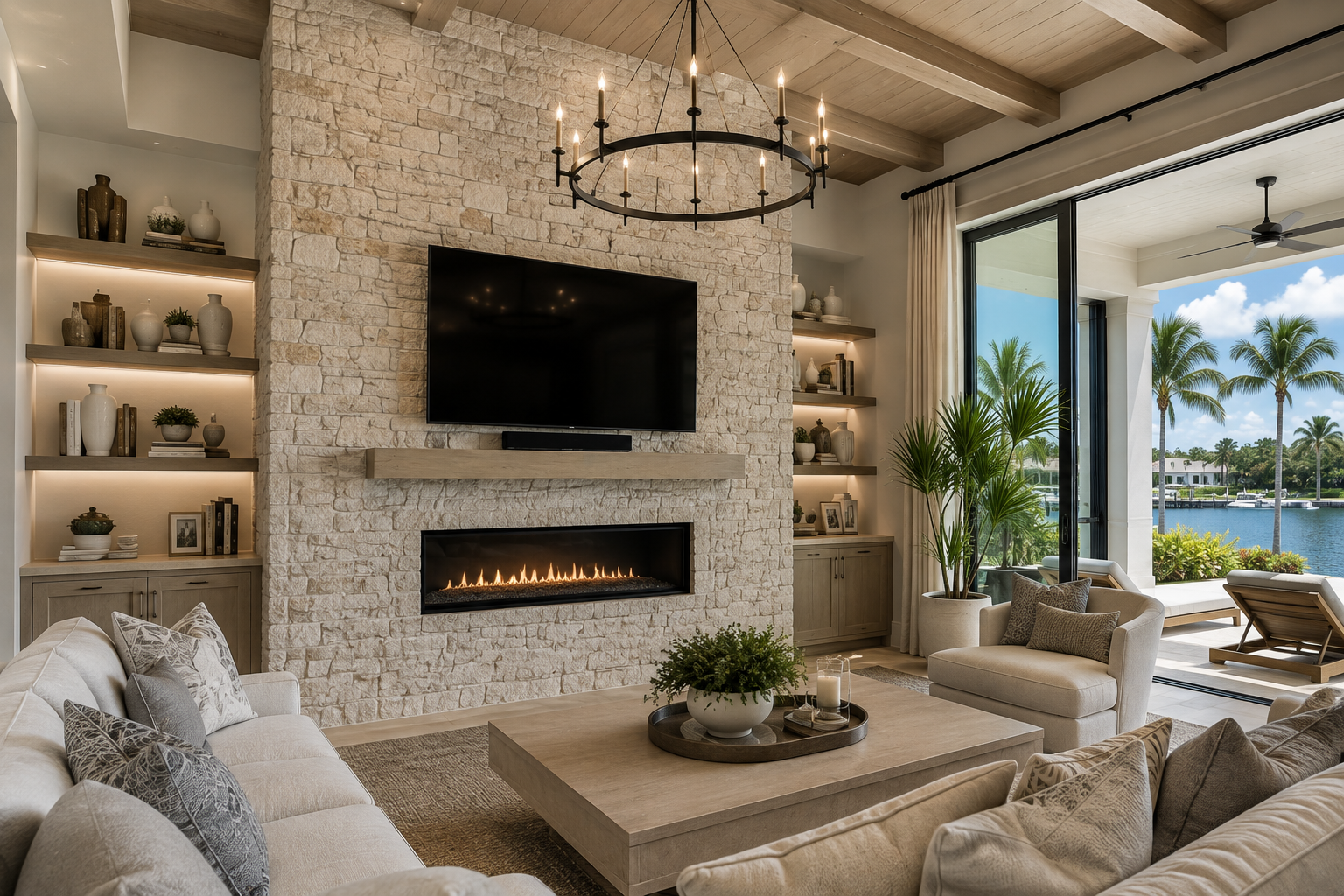
For years, the stone fireplace wall became the defining feature of the great room. Today, it's so common that it often feels expected rather than exceptional.
Stone is a beautiful material, but like any design element, it has the greatest impact when used intentionally. Covering an entire wall from floor to ceiling simply because it's become the standard can overwhelm a space and compete with everything around it.
Instead, ask whether the architecture actually calls for stone. Would a beautifully detailed plaster finish, warm wood paneling, or thoughtfully designed millwork create a more refined focal point? Sometimes restraint creates more impact than adding another material.
The goal isn't to avoid stone—it's to use it where it enhances the architecture rather than becoming a predictable backdrop.
3. Undersized Lighting Fixtures
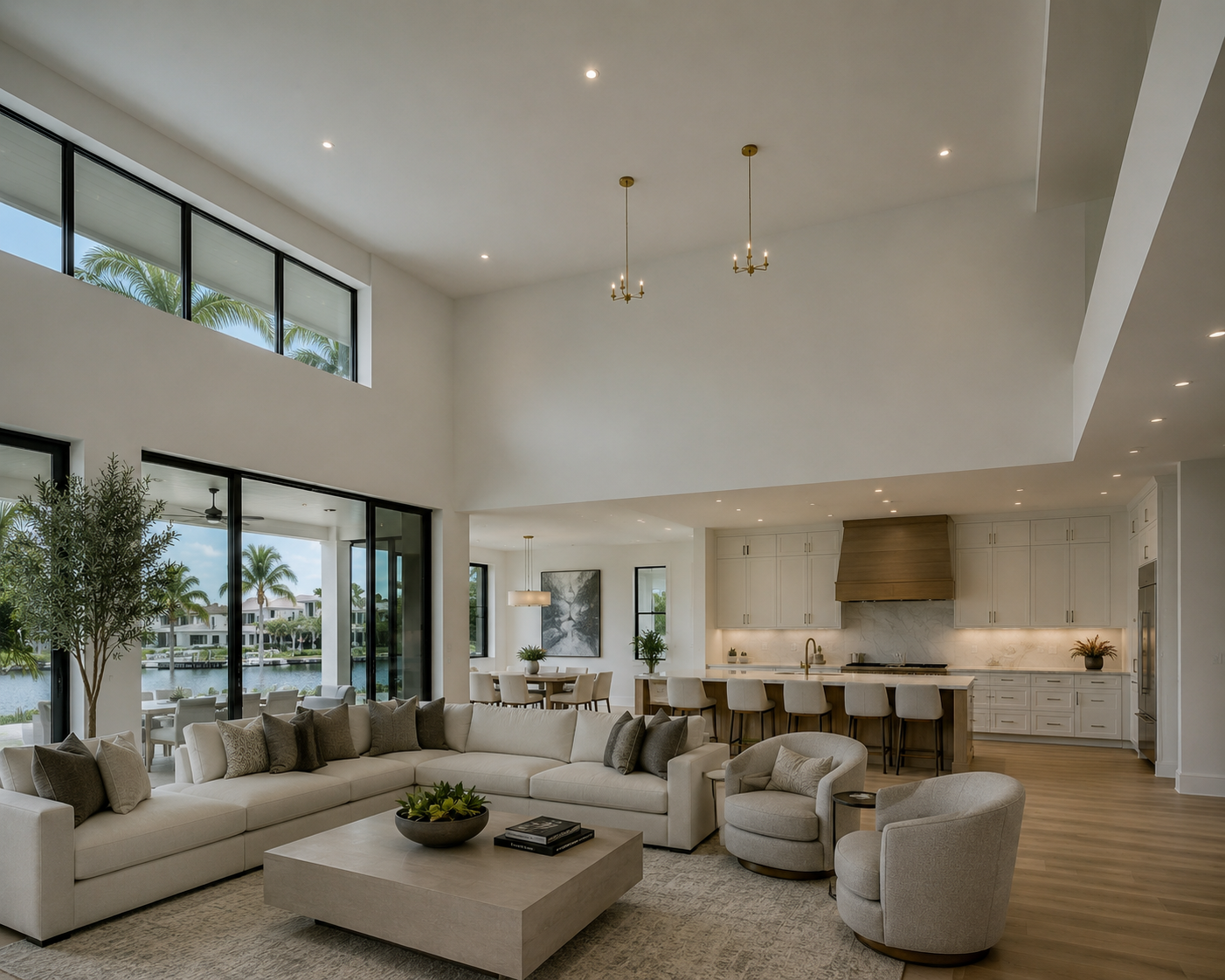
One of the quickest ways to make a multi-million-dollar home feel ordinary is installing lighting that's too small for the space.
A two-story foyer deserves more than a chandelier that visually disappears. A large dining table shouldn't be anchored by a pendant that feels like an afterthought. In expansive great rooms with soaring ceilings, lighting should relate to the volume of the architecture—not just the footprint of the furniture below.
This isn't about choosing the biggest fixture available. It's about choosing one that's properly scaled. When lighting is proportioned correctly, it grounds the room, creates balance, and feels as though it was always meant to be there.
The irony is that many homeowners worry a fixture will be "too big," when in reality, professionally designed homes often feature lighting that's larger than most people would initially feel comfortable selecting. Once installed, however, the proportions simply feel right.
Good design isn't about making a statement with size—it's about respecting the scale of the architecture.
4. The White Trim Formula
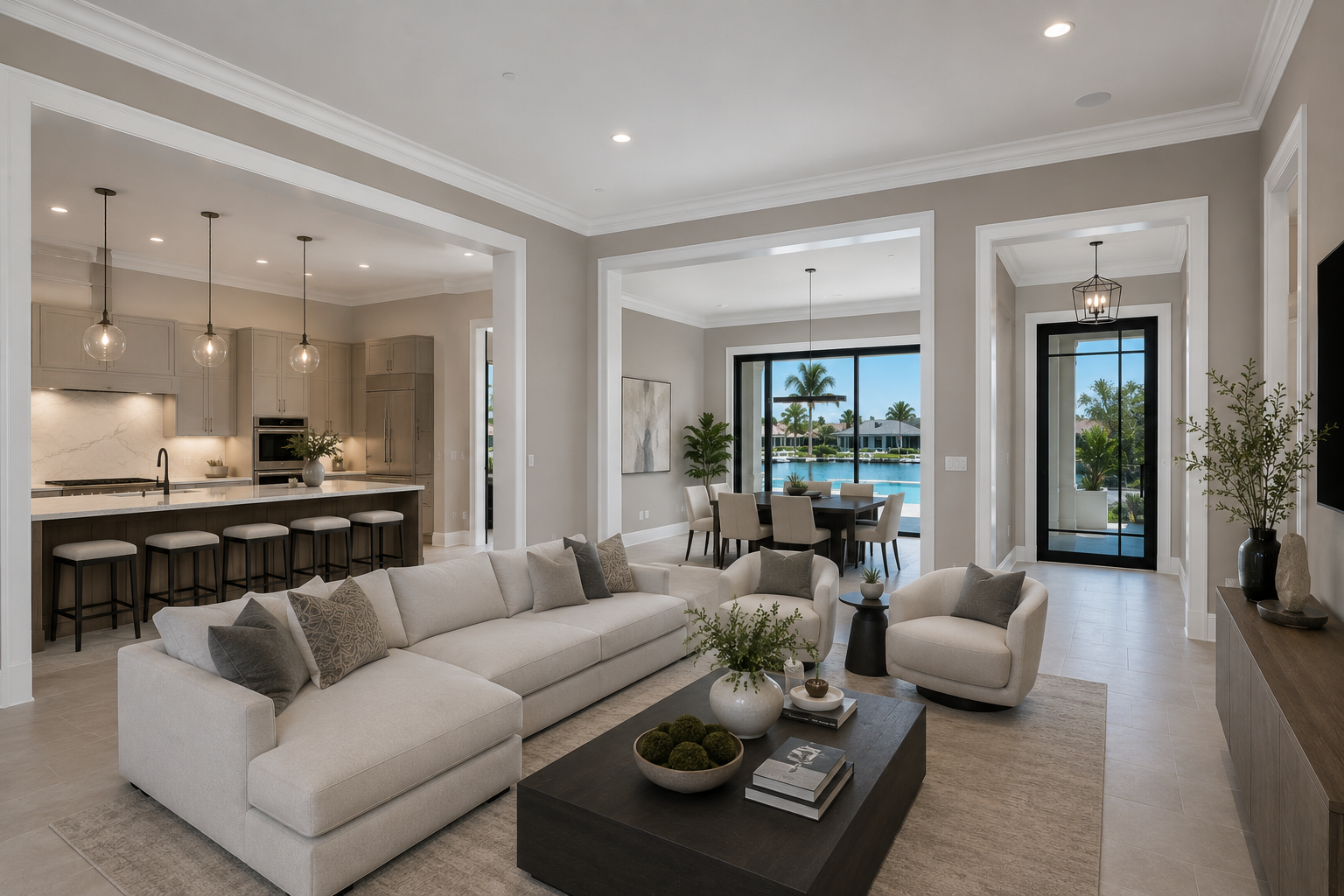
For decades, the formula has been the same: white baseboards, white crown molding, white ceilings, and a contrasting wall color. It's a timeless approach, and one that still has its place.
But some of the most sophisticated homes today are moving in a different direction.
Color drenching—where the walls, trim, cabinetry, and sometimes even the ceiling are finished in the same color or material—creates a sense of depth and cohesion that's difficult to achieve with contrasting white trim. Rather than drawing attention to every transition, it allows the architecture itself to take center stage.
The result isn't necessarily bolder—it's often quieter. Shadow lines become more apparent, millwork feels integrated rather than applied, and the room takes on a richness that photographs beautifully but feels even better in person.
This doesn't mean every room should be color drenched. Like any design decision, it should support the architecture and the mood of the space. But when done thoughtfully, it creates an atmosphere that feels timeless, layered, and distinctly custom.
Sometimes luxury isn't created by adding contrast—it's created by removing it.
5. Turning Your Back on the View
In Southwest Florida, one of the most valuable features of a home often isn't inside the home at all—it's what's beyond the glass.
Yet many kitchens are still designed with the primary seating facing the sink, cooktop, or backsplash, leaving family and guests staring at cabinetry while the waterfront, golf course, or preserve sits behind them.
Whenever possible, we encourage clients to think differently. Could the island seating face the windows instead? Could the sink or cooktop be positioned so the person preparing meals enjoys the same view as everyone else? Could the furniture layout create more opportunities to experience the landscape throughout the day?
There's a reason we're naturally drawn to water, greenery, and daylight. Studies have shown that even brief exposure to natural views can reduce stress, improve mood, and contribute to overall well-being. In a place like Naples, where sunshine, waterfronts, and lush landscapes are part of everyday life, the design should celebrate those moments rather than ignore them.
A well-designed home doesn't just frame the view—it invites you to experience it from the places where you spend the most time.
Luxury isn't just about owning the view. It's about living with it.
Final Thoughts
The most luxurious homes aren't defined by trends. They're defined by thoughtful decisions that respect the architecture, support the way people live, and continue to feel relevant long after the latest design movement has passed.
The question isn't whether a trend is beautiful.
It's whether it's beautiful for your home.
Because true luxury has never been about following what's popular.
It's about creating something that couldn't belong to anyone else.